
Read Trigg County Property Tax Records
Two offices split the work behind Trigg County property tax records. The PVA values each parcel for the assessment roll. The county-linked tax portal carries the bill. Those separate jobs blur easily when a search screen puts every number side by side. Value, exemption, bill status, and recorded sale price each answer a different question. A careful reading keeps them apart.
| Field | What it shows | Official source |
|---|---|---|
| Owner and parcel | Name and APN carried on the dated assessment roll | Trigg County PVA |
| Land and improvement values | Separate components when the card displays them | PVA property record |
| Assessed or fair-cash value | Tax-roll valuation for the stated year | PVA and Kentucky Revenue rules |
| Exemption and taxable amount | Relief applied after valuation | PVA assessment record |
| Bill, balance, and payment | Tax charged and current payment status if displayed | County-linked tax portal |
| Delinquency or certificate | Unpaid bill and later tax-sale record | County Clerk |
A deed's consideration can shape a later assessment. It is not the tax value, so read every number with its source and year attached.
January 1 Sets Trigg Assessments
Kentucky's property-tax calendar pins every assessment to January 1. That single date explains a common puzzle. A newly recorded deed can name one buyer while the Trigg County tax roll still lists the January 1 owner. Someone who takes title midyear may receive an in-care-of bill, yet the old owner of record stays on the assessment. Write down three dates before assuming an error. Start with the deed's execution or recording date, then add the roll's January 1 snapshot and the bill's tax year. The gap between them is often just timing. If a mismatch survives into the next cycle, ask the PVA where its owner field comes from and its effective date. Confirm the newest conveyance with the Clerk after that.
Note: An assessment-owner name is evidence tied to a roll year, not independent proof of present deed title.
Look Up a Trigg Tax Bill
The county links Properly's property-tax portal for online bills. It serves as both lookup and payment route, though the exact search fields vary on the live screen. Owner, address, bill number, or map number may appear. Expect only the fields the screen actually offers. Prior-year history, receipts, penalties, and installments should not be presumed unless the results plainly display them.
- Start with the exact APN or map number copied from the PVA record.
- Select the correct tax year and confirm the situs or owner if those labels appear.
- Record the original bill, balance, payment date, penalty, tax district, and receipt only as displayed.
- Compare the parcel and year to the assessment record before treating the result as a match.
- If the portal fails, contact the PVA for assessment facts and the Clerk for delinquent-tax records.
The captured Properly landing screen identifies the official county-linked route.
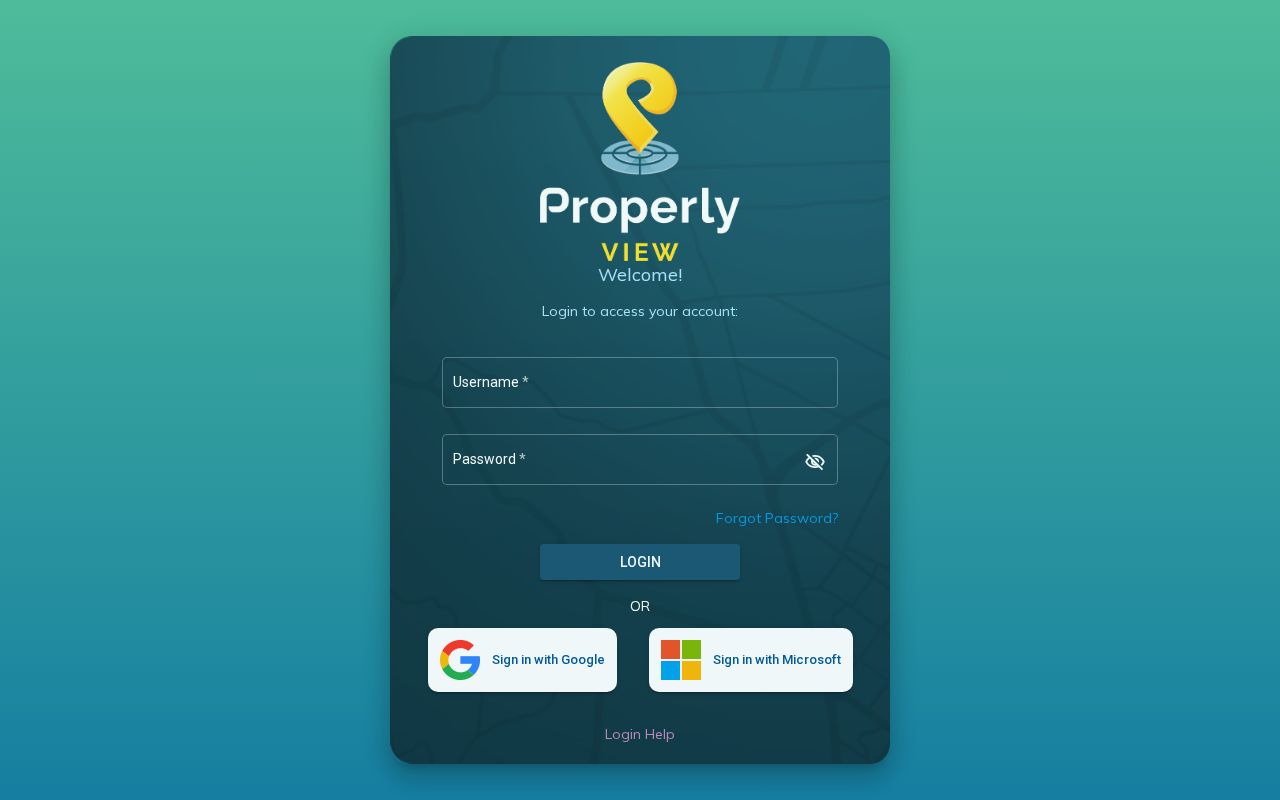
The live portal alone shows each field and year.
Trigg Property Tax Terms
Tax words look alike on a screen. They actually describe different steps in the process. Kentucky Revenue sets the standard for local PVAs, which assess real estate at estimated fair cash value. Agricultural land may qualify for a different agricultural value instead. Exemptions shrink the taxable figure only. For the statewide valuation and appeal framework local PVAs follow, Kentucky Revenue's residential, farm, and commercial property page is the reference.
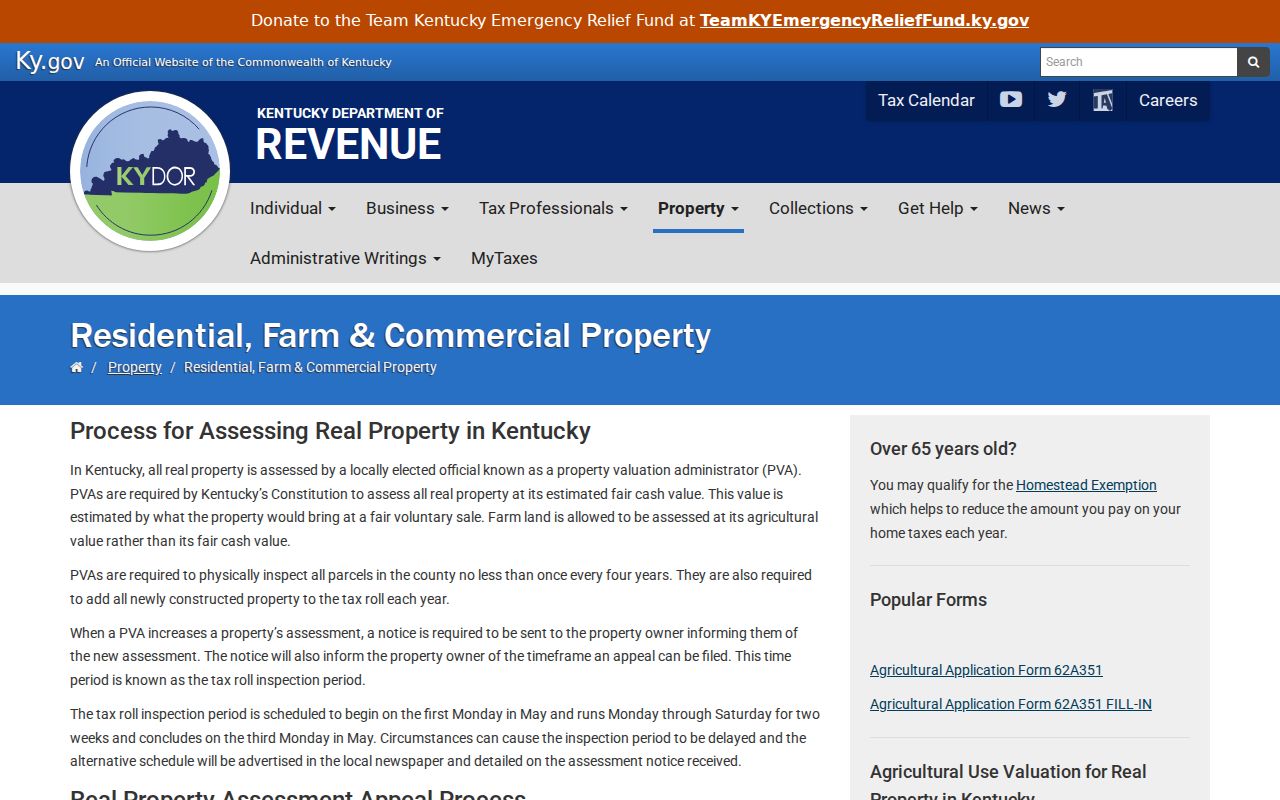
The state guidance explains the rule; the Trigg PVA record supplies the parcel-specific assessment.
- Assessed value
- The value placed on the tax roll for the stated year.
- Fair cash value
- Kentucky's estimate of the price property would bring in a fair voluntary sale.
- Levy or tax rate
- The rate applied by a taxing authority to calculate tax.
- Homestead exemption
- A qualifying reduction deducted from assessed value.
- Tax lien
- A recorded claim arising from unpaid tax.
Compare like years and classifications. A lake-area tract, a farm parcel, an improved home, and a vacant lot seldom make sound comparisons just because they sit near one another.
Search Trigg Assessment Fields
The Trigg County PVA links Property Search, Subscription Search, and forms. The search runs on the qPublic vendor interface. Search all, name, address, parcel ID, and alternate ID are the available modes. Typical result labels include Parcel, Alternate ID, Address, Ownership, City, Area, State, ASV, Ref Num, and STR.
| Search mode | Input to preserve | Tax use |
|---|---|---|
| Address | Exact situs and directionals | Find the parcel card |
| Name | Owner or entity as printed | Find roll entries under that form |
| Parcel ID | All APN punctuation and zeroes | Match the bill and assessment |
| Alternate ID | Secondary key exactly as shown | Resolve another office's reference |
Those are vendor-wide modes, not a Trigg parcel card. When the live record is unavailable, ask the PVA for land, improvement, assessed, agricultural, exemption, and tax-year fields.
Trigg Homestead and Exemption Records
Kentucky's homestead exemption page lists $49,100 for 2025 and 2026. Owners qualify at 65 or with a total disability. Applications go to the local PVA. Disability exemptions may require annual renewal. Historical Revenue data lists $46,350 for 2023 and 2024, then $49,100 for 2025 and 2026. Match each exemption amount to its tax year. Other constitutional exemptions use Form 62A023, and the PVA can say whether Trigg County keeps a local list. An exemption trims the taxable assessment, never the market estimate or a recorded sale price. Keep assessed, exempted, and taxable values in separate columns.
Contest a Trigg County Assessment
Kentucky Revenue sets the appeal window each spring. The real-property inspection period opens the first Monday in May and ends the third Monday in May, running 13 days from Monday through Saturday. A taxpayer must confer with the PVA first. The conference filing deadline falls one workday after the inspection period closes. Come prepared. Bring the property card, prior assessment, recent deed and consideration, photographs, comparable evidence, and the PVA's written response. The local board has three members, and its hearings occur 25 to 35 days after the conference or filing window. Dates shift, so use the current year's calendar.
Appeal window matters. Contact the Trigg PVA before the annual inspection period closes and confirm the one-workday conference deadline for that year.
Trigg Delinquent Property Tax Records
The annual delinquent-property-tax sale runs through the Clerk's delinquent-tax page. Trigg County publishes notice in the Cadiz Record. For the 2026 cycle, 2025 delinquent real-property bills ran on June 4, 2026. The sale was set for July 17, 2026. Registration closed July 2, 2026.
The registration form requires a spreadsheet with exactly MAP#, BILL#, TAX YEAR, and ADDRESS. It lists example parcel numbers in several punctuation styles. Fees run $5 per priority bill and $10 per current bill. They are capped at $250 on the form. Those are purchaser-registration details, not a property tax search result. The Clerk's delinquent-tax page remains the official place to check. It covers the current sale cycle and public-inspection instructions.
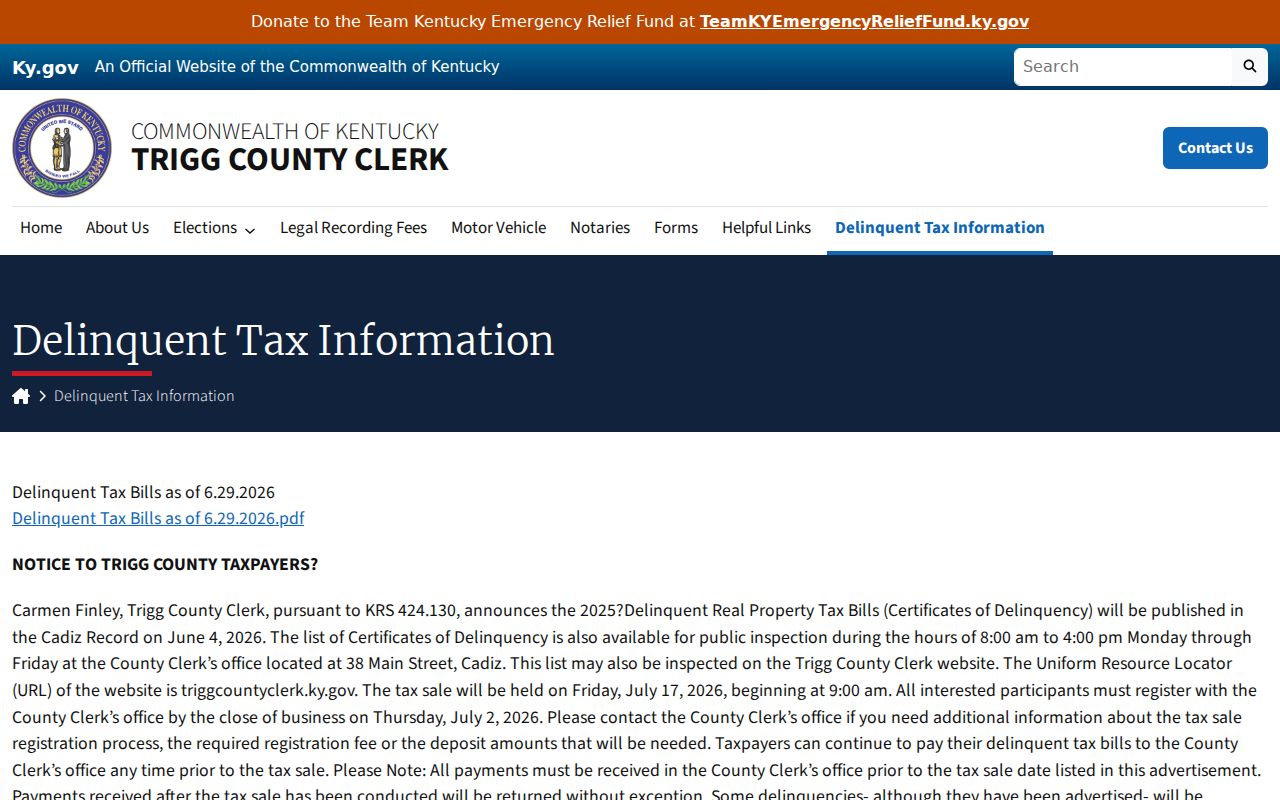
Sale dates reset annually. Follow the live notice. An older saved schedule can mislead you later. A delinquent bill or purchased certificate does not prove that title changed or that all liens vanished. The published rules say certificates become public records and are recorded in encumbrance books, so check later releases, assignments, deeds, and court records.
Offline Trigg Tax Record Access
Visit the Trigg PVA at 38 Main Street in Cadiz. The office lists 270-522-3271 and weekday hours of 8 a.m. to 4 p.m. It handles assessments, parcel identity, exemptions, and the required pre-appeal conference. Bring the APN, the situs, the owner as printed, and the tax year.
The County Clerk sits at the same street address. Delinquent real-estate taxes and tax-sale materials are its territory. Public inspection there fills gaps the online portal leaves. For older tax books, the John L. Street Library lists Trigg tax assessment volumes on microfilm, and KDLA provides a roll inventory and a request route.
Modernization is worth watching. The county's fiscal 2024 audit reported unspent microfilming and e-recording grant balances, but those balances do not prove that any specific Trigg County property tax record is online.
Compare Trigg Tax Years Carefully
A careful year-to-year comparison keeps each data point in its own column. Track the parcel number, tax year, January 1 owner, land value, improvement value, total assessment, exemption, taxable value, bill status, and source date. Match the same parcel first. Confirm the property class before drawing a trend. A deed consideration amount is a transfer fact under Kentucky recording law, not the PVA's assessment. One sale does not set every later tax value.
Historic exemption amounts belong to their own years. When an older tax bill differs from today's portal, check the annual calendar, the assessment date, the exemption then in effect, and any parcel split or consolidation before calling the record wrong. Save the portal access date. Ask the PVA or Clerk to explain any field that lacks a clear label. That step keeps payment status from being mistaken for a value determination or title event. The audit trail then survives for later county review.